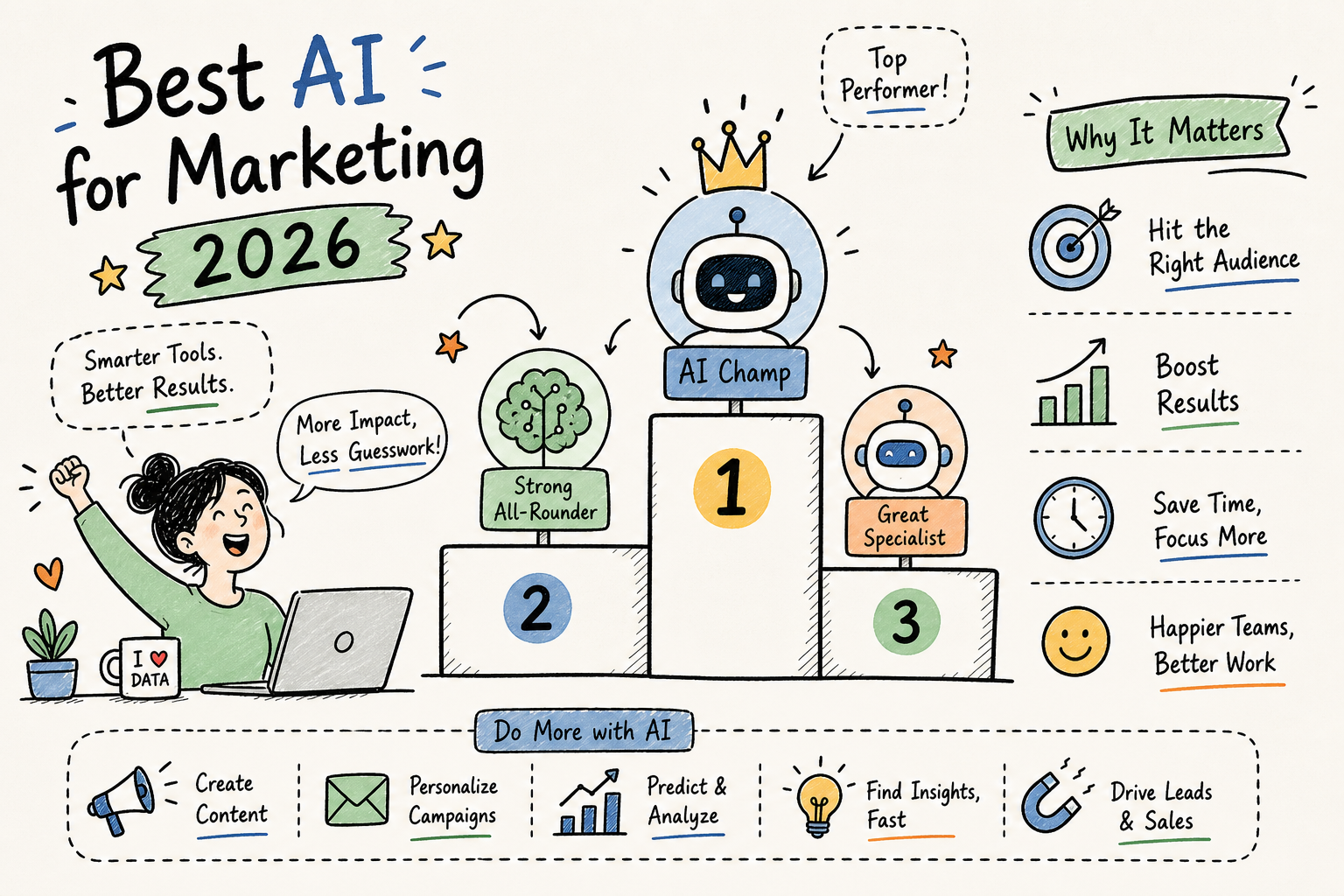
There are now hundreds of AI marketing tools on the market, and most roundups just dump a list on you with zero context. No budget guidance, no use-case filtering, no honest take on what actually works versus what just has a great product page. That’s frustrating when you’re a real marketer trying to make a real decision. Choosing the best AI for marketing is harder than it looks, not because good tools don’t exist, but because the wrong tool for your situation is just expensive noise.
AI marketing has genuinely changed shape in 2026. Generative AI is now embedded inside email platforms, ad creative suites, CRMs, and SEO tools. It’s not a separate category anymore. At Amayzing AI, we track and review AI tools across every marketing category, evaluating them against real use cases, published pricing, and documented user outcomes. This guide focuses on tools that have demonstrated consistent value, not just tools with great product pages.
Here’s what you’ll get: a category-by-category breakdown of the top AI marketing platforms, clear guidance on which tools fit which budgets and team sizes, and a concrete short list you can actually trial next week.
What to Look for Before Choosing an AI Marketing Tool
Use case specificity beats feature lists
Chasing the tool with the longest feature list is a trap. The best AI for marketing a solo freelancer running Google Ads is completely different from what an e-commerce brand with 50,000 email subscribers needs. Your first filter should always be primary use case: content creation, email automation, paid ads, SEO, analytics, or workflow automation. Pick your lane before you start comparing.
Overlapping platforms like HubSpot can seem appealing because everything lives in one place. But that convenience can sometimes cost more than two focused tools combined, depending on your contact volume and feature needs. Unless you genuinely need CRM plus email plus ads under one roof, two purpose-built tools will often outperform a bloated all-in-one at a lower price point.
Pricing tiers and what’s actually included
Many AI marketing tools advertise a free plan, but the more advanced AI-specific features, like predictive segmentation, auto-generated ad copy, or behavioral triggers, tend to unlock at higher tiers, often in the $50, $200/month range. That said, the entry point varies widely by tool and category. Some platforms, like Copy.ai and Brevo, surface meaningful AI capabilities at $9, $29/month. Before you sign up for anything, check specifically which features are gated and at which tier they unlock.
The good news: entry-level pricing has dropped significantly. Meaningful AI-powered marketing automation now starts at $9, $29/month across most categories. You don’t need an enterprise contract to get real value from these tools in 2026.
Best AI for Marketing: Content and SEO Tools
Jasper AI and Surfer SEO for brand-consistent content at scale\
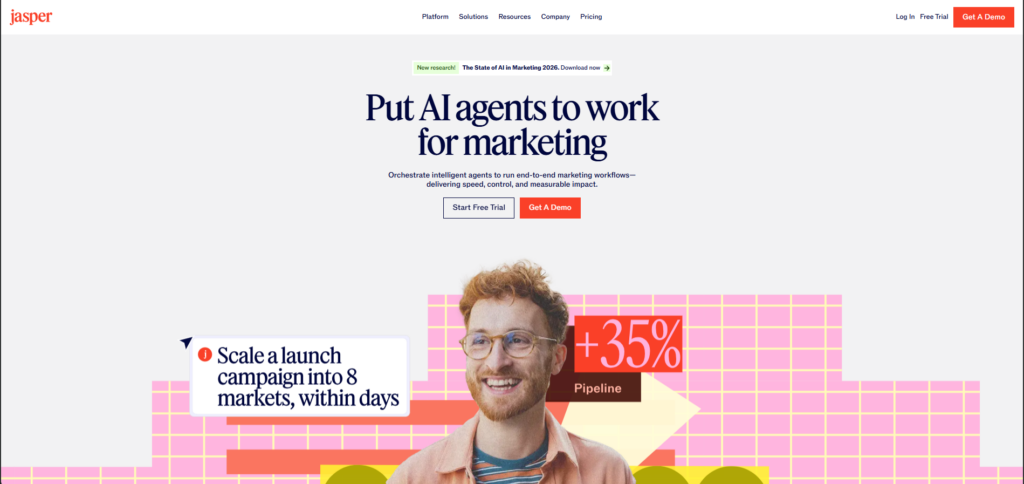
Jasper AI ($59/seat/month at current pricing) is the go-to for teams that need long-form, on-brand copy with consistent voice across campaigns. Its brand memory system learns your terminology and style, which makes it genuinely useful for agencies managing multiple clients with distinct voices. The output is polished and conversion-focused, especially for landing pages, email sequences, and product copy.
Pair Jasper with Surfer SEO ($79/month) and you get real-time content scoring against top-ranking pages as you write. This combination works well for content-led businesses where search traffic is a primary acquisition channel. Fair warning: the combined cost is $138/month minimum, which gets expensive fast for solo operators or early-stage teams watching burn.
For broader comparisons of AI content platforms and how they stack up, Semrush offers a useful guide to the best AI content marketing tools, which can help you validate your shortlist against industry benchmarks.
ChatGPT and Copy.ai for lean teams watching spend
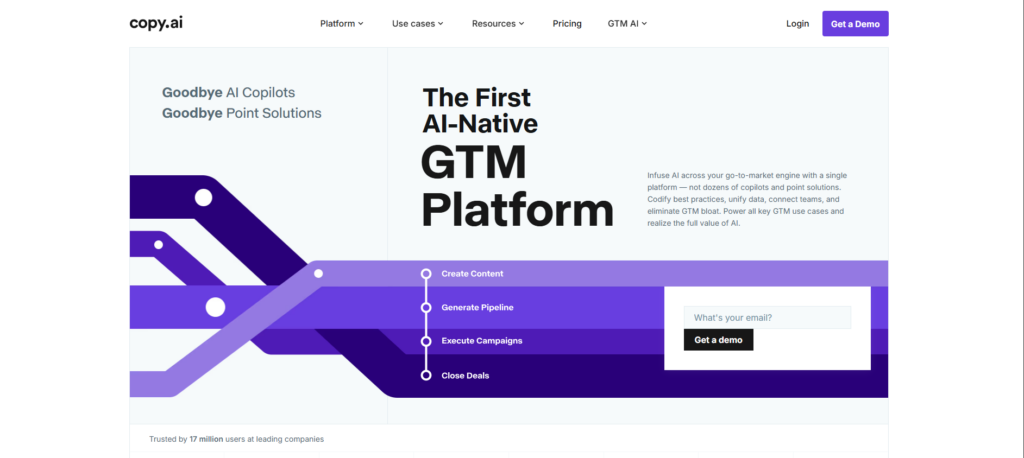
For smaller budgets, ChatGPT Plus ($20/month) paired with Copy.ai’s free or $29/month plan covers most copywriting and ideation needs. These tools require more prompt skill and editing than Jasper, and the output won’t match brand guidelines without extra work. But the cost difference is significant, and the quality gap has narrowed considerably.
ChatGPT’s GPT-4o tier now handles SEO briefs, email sequences, and ad hooks with solid quality. For a small marketing team producing one to three pieces of content per week, it’s a genuine workhorse, and one of the more accessible AI content generators available at this price point. Small businesses that have added ChatGPT to their workflow consistently report significant jumps in output volume, often at a fraction of what content used to cost.
AI Platforms for Email Automation and Personalization
Klaviyo for e-commerce lifecycle campaigns
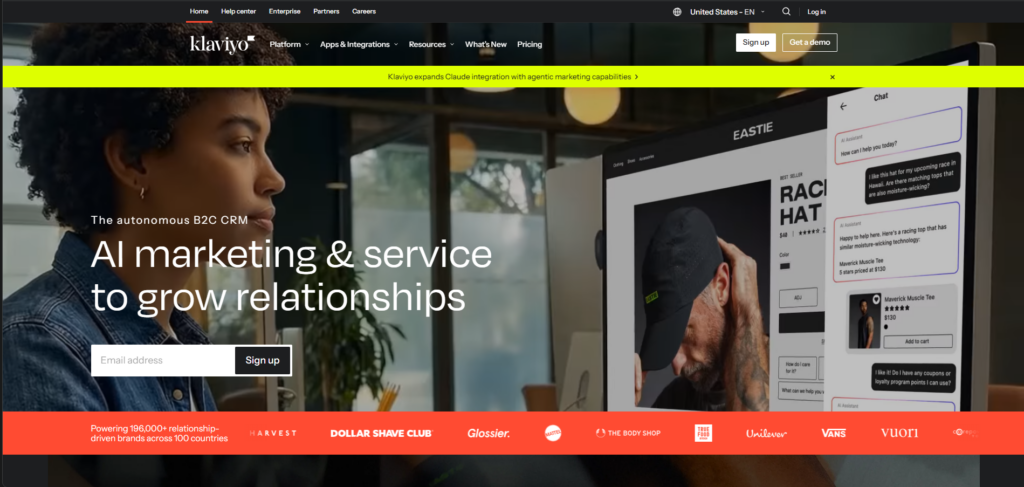
Klaviyo is the strongest AI email platform for e-commerce brands, full stop. Its predictive analytics layer identifies customers likely to churn or make high-value purchases, enabling behavioral triggers that go well beyond basic drip sequences. The pricing starts free and scales with your contact count, which makes it approachable for brands just starting out.
The SMS plus email combination in one platform is a real advantage for DTC brands running seasonal campaigns. Instead of stitching together separate tools and managing two integrations, Klaviyo handles both channels with shared audience data. Deep Shopify integration means your store data flows directly into your segmentation without manual syncing.
HubSpot AI and ActiveCampaign for full-funnel SMB workflows
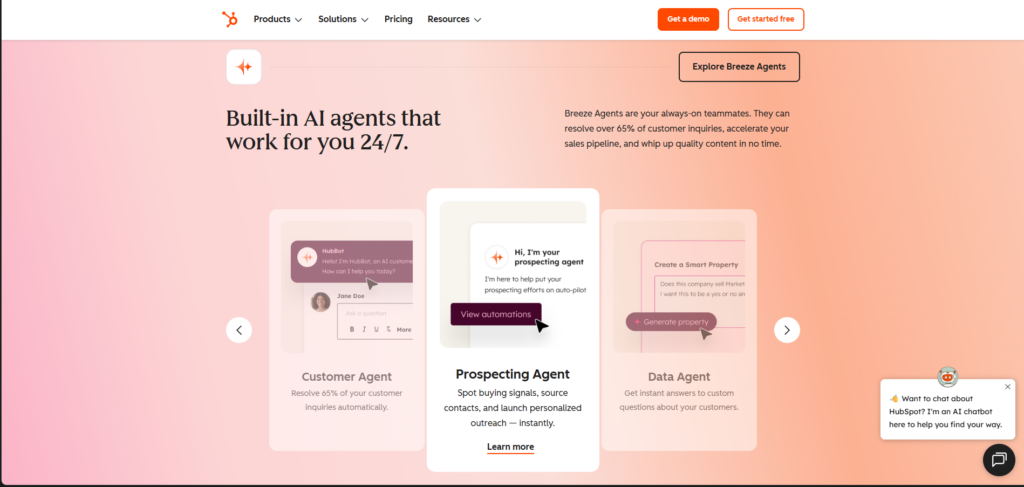
HubSpot’s marketing hub (free CRM, paid marketing tiers from $50/month) bundles CRM data with AI-driven email personalization, lead scoring, and ad retargeting in one platform. This is the right call for SMBs that want a unified view across sales and marketing without building a custom stack. The tradeoff is cost: as your contact list grows, HubSpot’s pricing grows with it.
ActiveCampaign covers the mid-market well with lifecycle automation, predictive sending, and behavior-based branching logic at competitive pricing. If you’re choosing between them, HubSpot suits teams that want a platform-first approach with CRM at the center. ActiveCampaign suits teams that want deep automation flexibility without paying for CRM features they don’t need.
For a practical comparison of AI marketing platforms and where they fit in common stacks, Campaign Monitor’s comparison of the best AI marketing tools is a helpful supplementary read when you’re narrowing options.
AI Tools for Ad Optimization and Social Scheduling
AdCreative.ai for generating performance ad creative fast
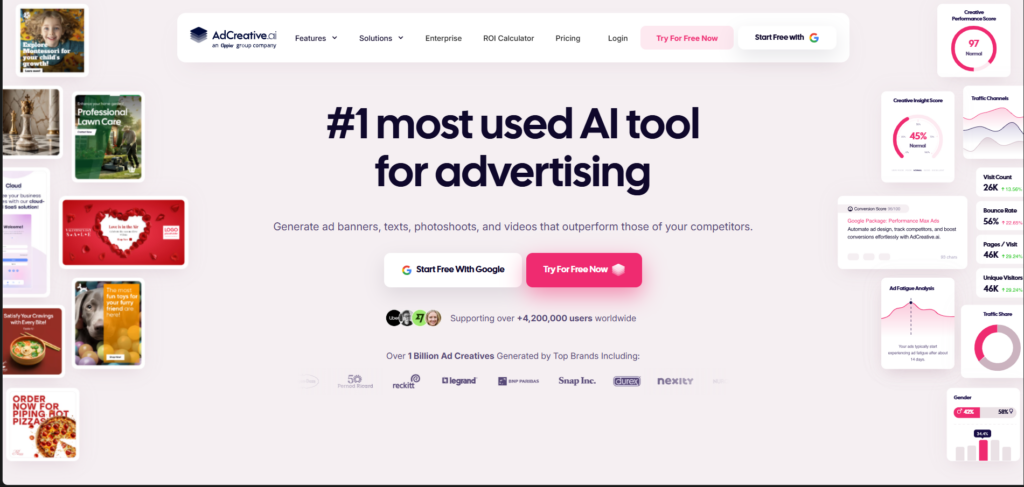
AdCreative.ai ($29/month entry) is the most accessible tool for generating ad visuals and copy at volume. It pulls your brand colors and fonts to keep creative on-brand, and it generates performance scores before you spend a dollar testing. For small teams running paid social without a dedicated designer, this is genuinely useful. The entry price makes it low-risk to evaluate against your current process.
The honest caveat: some users report that output can feel generic or repetitive at higher volumes. It’s a creative acceleration tool, not a creative strategy tool. Use it to speed up production and test more variants, not to replace the thinking behind your campaigns. If you’re focused on turning ideas into visual assets, see our article AI for Creatives: 5 Tools That Turn Ideas Into Art, Amayzing AI for hands-on tool suggestions.
Albert.ai and Buffer for scale and scheduling
Albert.ai targets mid-to-enterprise teams with custom pricing, offering automated cross-channel media buying that adjusts spend in real time based on performance signals. According to Albert.ai’s published case studies, it has been used by major brands to test over 11,000 creative combinations, with some campaigns reporting ROAS figures exceeding 800%. This is not the right tool if you’re spending less than $50k/month on ads, the complexity and cost only make sense at scale.
For teams that need AI-assisted social scheduling without enterprise pricing, Buffer at $6/month per channel is the clean, no-fuss answer. It handles scheduling, AI-assisted caption writing, and basic analytics. AdCreative.ai and Albert.ai handle creative generation and media buying, Buffer handles distribution. You likely need both categories covered, not one or the other.
If video ads are a core part of your strategy, check our guide on the Best AI Tools to Use for Video Generation in 2026, Amayzing AI for vendor recommendations and workflow notes specific to video production.
The Right Stack for Your Budget and Team Size
The lean startup stack: $0 to $50 per month
For solo marketers and early-stage startups, a working stack looks like this: ChatGPT Plus for content and copy ($20/month), Mailchimp’s free tier for email (up to 500 contacts), Buffer’s free plan for social scheduling across three channels, and Google Analytics 4 for performance data at no cost. This covers content, email, social, and analytics for roughly $20, $25/month total.
This stack requires more manual effort than higher-tier alternatives. Mailchimp’s AI personalization features are limited on the free plan, and getting ChatGPT to optimize content for SEO requires deliberate prompting and extra editing steps. But it works, and it’s a legitimate starting point before you have the budget to invest further. For a broader primer on AI marketing tools and foundational concepts, see Coursera’s overview of AI marketing tools.
The growing SMB stack: $100 to $500 per month
For teams with real budget and real goals, this combination hits the highest-impact channels without enterprise contracts: Surfer SEO ($79/month) for content-led SEO, Klaviyo (scales with list size) for email and SMS automation, AdCreative.ai ($29/month) for paid creative, and Zapier on a mid-tier plan to connect everything without custom development. Total comes in around $150, $200/month before Klaviyo contact-count scaling.
This is the stack we’d recommend to most small businesses in 2026 who are serious about marketing ROI. Teams running focused AI tools across content and email workflows, rather than spreading thin across many platforms, tend to see the strongest results. A tightly managed stack like this is where that kind of measurable lift becomes achievable.
When enterprise pricing makes sense
Albert.ai, Semrush ($129, $499/month), 6sense (custom pricing), and HubSpot’s higher marketing tiers make sense when your team exceeds five marketers, you’re managing significant ad spend across multiple channels, or you need multi-channel attribution baked in rather than stitched together manually. A useful threshold: if managing integrations and attribution manually is consuming more than a full day per week, enterprise MarTech AI software starts to justify its cost. Before that point, they’re usually overkill.
Build a Stack You’ll Actually Use
The decision framework is simple: start with your primary use case, match tools to your current budget tier, and resist the urge to adopt too many platforms at once. Two tools used well beat five tools used poorly every time. Start with free trials, measure impact over 60 days, and only upgrade when a tool is actively saving time or generating measurable revenue lift.
One more thing worth tracking: privacy compliance. GDPR and CCPA obligations now extend into automated decision-making and AI personalization workflows. Before you deploy any tool that handles customer data, verify that it supports consent management, data deletion requests, and audit logging. Most reputable platforms do, but always confirm before you’re processing real customer data at volume. For a detailed look at how AI tools can meet regulatory requirements, Glean’s piece on how AI tools ensure compliance with GDPR and CCPA is a practical resource.
The AI marketing space in 2026 moves fast, with new platforms and features shipping every week. If you want to find the best AI for marketing for your team without drowning in product announcements and unverified reviews, Amayzing AI’s curated directory organizes vetted marketing AI tools by use case so you can find what you need in minutes, not hours. Every tool is reviewed against a consistent quality standard before it earns a spot, and the directory is updated regularly as new tools emerge. We add new tools daily. Check back when you’re ready to go deeper. Also see our guide on How to Stay Current With New AI Tools Without Burnout, Amayzing AI for strategies to keep up without burning out.